Egglestone
Title
Egglestone
Also Known As
Eglestone, Egliston, Eglyston, Englestona
Dates
Founded 1195-1198; dissolved 1540
Dedication
John the Baptist, Mary
Affiliation
Medieval Diocese
Circary
History
Egglestone was founded between 1195 and 1198, with its first brothers coming from Easby. Always a small and poorly endowed community, its abbey church was still nonetheless rebuilt and enlarged in the 13th century as part of a general programme of rebuilding. It was sacked twice in the 14th century.
Following Eggletone's dissolution in 1540, the property was granted to one Robert Strelley, who converted it into a private residence. The site was uninhabited in the late 18th century, and during the 19th century was turned into a group of dwellings for labourers.
Following Eggletone's dissolution in 1540, the property was granted to one Robert Strelley, who converted it into a private residence. The site was uninhabited in the late 18th century, and during the 19th century was turned into a group of dwellings for labourers.
Heads of Community
Abbots
Ralph de Moleton, fl. 1198
William
Nicholas, fl. 1200
Stephen, fl. 1205
H., fl. 1214
Robert, fl. 1216
William, fl. 1226
Roger, fl. 1228-29
Hamo, ca. 1235-ca. 1239
Robert, ca. 1250-ca. 1254
John of Easby, ca. 1296-1307
Thomas of Durham, 1307-?
William, 1309-?
Bernard of Langton, 1313-?
John of Theakston, 1330-?
Alexander of Easby, 1349-?
William of Startforth (or de Stratford), 1351-?
John, fl. 1364
Peter of Easby, 1377-?
John English (or Inglys), ca. 1401-1411
John of Wells, 1411-1412
Thomas Moreton (or Murton), 1412-aft. 1423
John de Moreton, fl. 1430s
Thomas Rayner, 1445-1449
Richard Hilton, 1449-?
William Mydelham, 1451-?
John Woolston, 1455-?
Robert Ellerton, 1476-?
William Westerdale, 1495-?
John Wakefield, 1503-?
Thomas Darnton (or Shepherd), 1519-1540
Ralph de Moleton, fl. 1198
William
Nicholas, fl. 1200
Stephen, fl. 1205
H., fl. 1214
Robert, fl. 1216
William, fl. 1226
Roger, fl. 1228-29
Hamo, ca. 1235-ca. 1239
Robert, ca. 1250-ca. 1254
John of Easby, ca. 1296-1307
Thomas of Durham, 1307-?
William, 1309-?
Bernard of Langton, 1313-?
John of Theakston, 1330-?
Alexander of Easby, 1349-?
William of Startforth (or de Stratford), 1351-?
John, fl. 1364
Peter of Easby, 1377-?
John English (or Inglys), ca. 1401-1411
John of Wells, 1411-1412
Thomas Moreton (or Murton), 1412-aft. 1423
John de Moreton, fl. 1430s
Thomas Rayner, 1445-1449
Richard Hilton, 1449-?
William Mydelham, 1451-?
John Woolston, 1455-?
Robert Ellerton, 1476-?
William Westerdale, 1495-?
John Wakefield, 1503-?
Thomas Darnton (or Shepherd), 1519-1540
Status
Abbey
Archival Sources
Carlisle, Cumbria Archive Centre
D LONS/L1/1/18/36 (17th c.)
Durham, Durham University Library and Collections
Additional MS 447 (1522)
Kew, The National Archives
WORK 31/1186 (1926, plan)
WORK 31/1187 (1926; plan)
WORK 31/1188 (1926; plan)
WORK 31/1189 (1926; plan)
WORK 31/1190 (1926; plan)
Leeds, Yorkshire Archaeological and Historical Society
DD56.
London, Victoria and Albert Museum
E.987-2001. (1893, photo)
Swindon, Historic England Archive
AL0264/063/01 (1928, plan)
Warwick, Warwickshire County Record Office
CR 26/1/12/L/23 (ca. 1299)
CR 26/1/12/L/32 (1299)
D LONS/L1/1/18/36 (17th c.)
Durham, Durham University Library and Collections
Additional MS 447 (1522)
Kew, The National Archives
WORK 31/1186 (1926, plan)
WORK 31/1187 (1926; plan)
WORK 31/1188 (1926; plan)
WORK 31/1189 (1926; plan)
WORK 31/1190 (1926; plan)
Leeds, Yorkshire Archaeological and Historical Society
DD56.
London, Victoria and Albert Museum
E.987-2001. (1893, photo)
Swindon, Historic England Archive
AL0264/063/01 (1928, plan)
Warwick, Warwickshire County Record Office
CR 26/1/12/L/23 (ca. 1299)
CR 26/1/12/L/32 (1299)
Reference
Cottineau, I: col. 1030
Dugdale, 943-944
HE: Egglestone Abbey Premonstratensian monastery: inner precinct, monastic enclosures and post-medieval house; ruins of Egglestone Abbey
MP, II: 55-56; III: 616
NCT: Egglestone Abbey
PAS: Cloister; cloister; cloister (exterior); church (exterior); church (exterior)
VW, 82
Dugdale, 943-944
HE: Egglestone Abbey Premonstratensian monastery: inner precinct, monastic enclosures and post-medieval house; ruins of Egglestone Abbey
MP, II: 55-56; III: 616
NCT: Egglestone Abbey
PAS: Cloister; cloister; cloister (exterior); church (exterior); church (exterior)
VW, 82
Bibliography
Dunn, Christopher, and Amy Lax. “The Medieval and Later Landscape at Egglestone Abbey, Teesdale, County Durham.” Archaeological Investigation Report Series. English Heritage, 2001. https://historicengland.org.uk/research/results/reports/6487/TheMedievalandLaterLandscapeatEgglestoneAbbeyTeesdaleCountyDurhamSurveyReport.
Graham, Rose. Egglestone Abbey, Yorkshire. Department of the Environment Official Handbook. London: Her Majesty’s Stationery Office, 1958.
Hislop, Malcolm J.B. Barnard Castle, Bowes Castle and Egglestone Abbey. English Heritage Guidebooks. London: English Heritage, 2019.
Hodgson, J.F. “Egglestone Abbey.” Yorkshire Archaeological Journal 18 (1904): 129–82. https://hdl.handle.net/2027/uc1.b4957848?urlappend=%3Bseq=153.
———. The Praemonstratensian Abbey of S. Mary & S. John Baptist, Eggleston. Leeds: s.n., 1895.
Kenyon, Katy, and Lorimer Poultney. Barnard Castle, County Durham : Egglestone Abbey, North Yorkshire : Bowes Castle, North Yorkshire. English Heritage Guidebooks. London: English Heritage, 1999.
Monthly Chronicle of North-country Lore and Legend. “Egglestone Abbey.” November 1891. https://books.google.com/books?id=ULc_AQAAMAAJ.
Page, William, ed. “Premonstratensian Houses: Egglestone Abbey.” In A History of the County of York, 3:249–51. London, 1974. https://www.british-history.ac.uk/vch/yorks/vol3/pp249-251.
Turnbull, Percival, and Deborah Walsh. “The Excavation of the Gatehouse, Egglestone Abbey, Co Durham. A Report to Durham County Council.” The Brigantia Archaeological Practice, 2000.
Image Credit
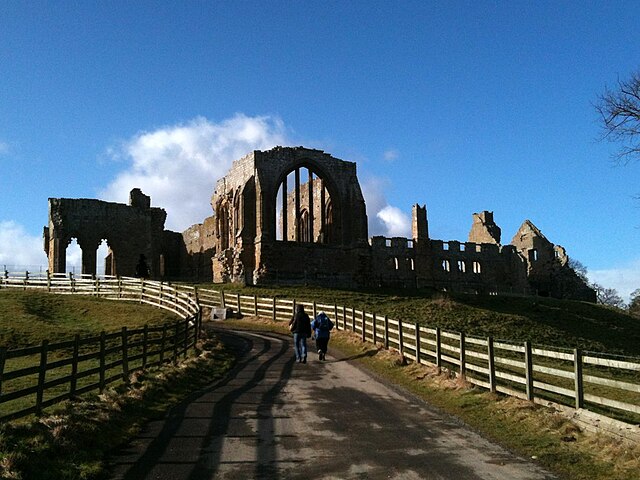
Ruins of Egglestone Abbey, 2012. Wikimedia.

Files
Collection
Citation
“Egglestone,” A Premonstratensian Atlas, accessed October 16, 2026, https://yvonneseale.org/atlas/items/show/150.