Himmelspforte (Austria)
Title
Himmelspforte (Austria)
Also Known As
Porta Coeli Vindobonae, Stift Sankt Agnes zur Himmelpforte
Dates
Founded 12/13th c.; Premonstratensian from 1267; Dominican from 1444; Clarissan from 1574; Augustinian from 1586; dissolved 1783
Dedication
Agnes; Catherine
Affiliation
Medieval Diocese
Circary
History
Himmelspforte had its origins in the 12th century as an extraregular community of women. It became a more formal monastic community ca. 1230 at the instigation of Constance of Hungary, queen of Bohemia. In 1267/70, Himmelspforte joined the Premonstratensian Order. Following a fire in 1318, the community's church was rebuilt and consecrated in 1331. A new group of sisters arrived to join the community around that date from Hungary.
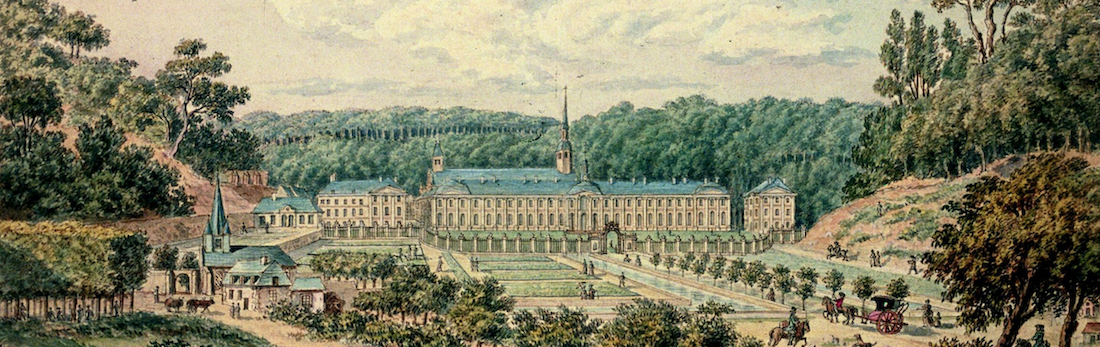
In 1444, it joined the Dominican Order. Himmelspforte was ultimately dissolved in 1783, and nothing of the monastic complex now remains.
Not to be confused with Himmelspforte (Germany).
In 1444, it joined the Dominican Order. Himmelspforte was ultimately dissolved in 1783, and nothing of the monastic complex now remains.
Not to be confused with Himmelspforte (Germany).
Heads of Community
Magistrae
Adelheid, 1270-1272
Gertrude, 1272-?
Engel, 1327-?
Agnes Snaeczel (or der Snaeczelinne), 1330-?
Katharina Maer, 1355-1369
Margarete Vierdung, 1369
Kunigund von Grinzing, 1370
Prioresses
Agnes von Passau, fl. 1383
Perchta von Ameis, ca. 1400
Agnes Maer, fl. 1407
Adelheid, 1270-1272
Gertrude, 1272-?
Engel, 1327-?
Agnes Snaeczel (or der Snaeczelinne), 1330-?
Katharina Maer, 1355-1369
Margarete Vierdung, 1369
Kunigund von Grinzing, 1370
Prioresses
Agnes von Passau, fl. 1383
Perchta von Ameis, ca. 1400
Agnes Maer, fl. 1407
Status
Women's community
Archival Sources
Much of the community's medieval archives was destroyed in a fire in 1525.
Göttweig, Stiftsarchiv
1388 V 09 (1388)
1388_VIII_04 (1388)
Klosterneuburg, Stiftsarchiv Klosterneuburg
Urkunden Klosterneuburg, 1336_XI_25 (1336)
Urkunden St. Dorothea, 1454 XI 07 (1454)
Vienna, Diözesanarchiv
14520219 (15th c.)
Vienna, Österreichisches Staatsarchiv
HHStA UR AUR 1196 (1269)
HHStA UR AUR 1211 (1270)
HHStA UR AUR 1234 (1271)
HHStA UR AUR 1240 (1271)
HHStA UR AUR 2681 (1296)
HHStA UR AUR 5655 (1328)
HHStA UR AUR 5840 (1330)
HHStA UR AUR 5846 (1330)
HHStA UR AUR 6699 (1337)
HHStA UR AUR 7846 (1346)
HHStA UR AUR 8191 (1348)
HHStA UR AUR 8252 (1349)
HHStA UR AUR 8612 (1351)
HHStA UR AUR 8673 (1352)
HHStA UR AUR 8787 (1353)
HHStA UR AUR 9902 (1359)
HHStA UR AUR 10138 (1360)
HHStA UR AUR 10519 (1362)
HHStA UR AUR 10592 (1363)
HHStA UR AUR 11752 (1368)
HHStA UR AUR 13395 (1378)
HHStA UR AUR 14487 (1383)
HHStA UR AUR 16721 (1395)
HHStA UR AUR 17450 (1399)
Vienna, Stiftsarchiv Schotten
1272 XII 06 (1272)
1355 V 21 (1355)
1362 II 21 (1362)
1409_X_26 (1409)
Göttweig, Stiftsarchiv
1388 V 09 (1388)
1388_VIII_04 (1388)
Klosterneuburg, Stiftsarchiv Klosterneuburg
Urkunden Klosterneuburg, 1336_XI_25 (1336)
Urkunden St. Dorothea, 1454 XI 07 (1454)
Vienna, Diözesanarchiv
14520219 (15th c.)
Vienna, Österreichisches Staatsarchiv
HHStA UR AUR 1196 (1269)
HHStA UR AUR 1211 (1270)
HHStA UR AUR 1234 (1271)
HHStA UR AUR 1240 (1271)
HHStA UR AUR 2681 (1296)
HHStA UR AUR 5655 (1328)
HHStA UR AUR 5840 (1330)
HHStA UR AUR 5846 (1330)
HHStA UR AUR 6699 (1337)
HHStA UR AUR 7846 (1346)
HHStA UR AUR 8191 (1348)
HHStA UR AUR 8252 (1349)
HHStA UR AUR 8612 (1351)
HHStA UR AUR 8673 (1352)
HHStA UR AUR 8787 (1353)
HHStA UR AUR 9902 (1359)
HHStA UR AUR 10138 (1360)
HHStA UR AUR 10519 (1362)
HHStA UR AUR 10592 (1363)
HHStA UR AUR 11752 (1368)
HHStA UR AUR 13395 (1378)
HHStA UR AUR 14487 (1383)
HHStA UR AUR 16721 (1395)
HHStA UR AUR 17450 (1399)
Vienna, Stiftsarchiv Schotten
1272 XII 06 (1272)
1355 V 21 (1355)
1362 II 21 (1362)
1409_X_26 (1409)
Reference
Bibliography
Bálint, Sándor. “A somlóvásárhelyi premontrei apácák (A szegedi Szentlélek- és a bécsi Porta Coeli-kolostor között).” A Veszprém megyei múzeumok közleményei 11 (1972): 291–300. https://epa.oszk.hu/01600/01610/00011/pdf/vmm_11_1972_18_balint.pdf.
Czeike, Felix. “Himmelpfortkloster.” In Historisches Lexikon Wien in 5 Bänden, 3:191–92. Vienna: Kremayr & Scheriau, 1992.
Harl, Ortolf. “Die Ausgrabungen im ehemaligen Himmelpfortkloster.” Jahrbuch des Vereins für Geschichte der Stadt Wien 34 (1978): 9–23.
Hollnsteiner, Hildegard. “Beitrag zur Geschichte des Augustiner-Chor-Frauenstiftes zur Himmelpforte in Wien.” M.A. Thesis, University of Vienna, 1948.
Schedl, Barbara. “Hof -- Stadt -- Kloster. Zu Funktions- und Gefühlsräumen mittelalterlicher Frauenklöster in Wien.” In Funktionsräume, Wahrnehmungsräume, Gefühlsräume: Mittelalterliche Lebensformen zwischen Kloster und Hof, 41–58. Veröffentlichungen des Instituts für Österreichische Geschichtsforschung 59. Wien: Böhlau, 2011.
Schimmer, Karl August. “Das Frauenkloster Himmelpforte in Wien.” Jahrbuch für Landeskunde von Nieder-Oesterreich 4/5 (1906): 137–224. https://books.google.com/books?id=TLEUAAAAYAAJ&pg=PA137.
Žák, Alfons. “Das Frauenkloster Himmelpforte in Wien (Schluss).” Jahrbuch für Landeskunde von Nieder-Oesterreich 6 (1907): 93–188. https://bibliothekskatalog.noel.gv.at/!Jahrbuch!1907.pdf.
———. “Das Frauenkloster Himmelpforte in Wien (zirka 1131-1586).” Jahrbuch für Landeskunde von Nieder-Oesterreich 4/5 (1906): 137–224. https://www.zobodat.at/pdf/Jb-Landeskde-Niederoesterreich_4-5_0137-0224.pdf.
———. “Das Frauenkloster Himmelspforte in Wien.” St. Norbertus Blatt: Zeitschrift zür Förderung katholischen Lebens, zugleich Organ der eucharistischen und charitativen Vereine, Bruderschaften und Werke in Oesterreich 5, no. 10 (1893).
Image Credit
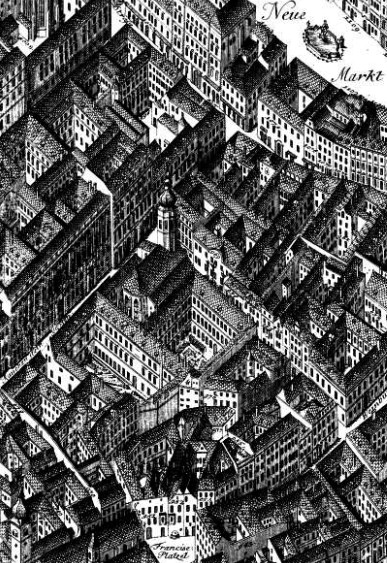
The Himmelpfortkloster in the 18th century. Detail from Joseph Daniel von Huber, "Vogelschauplan der Stadt Wien mit ihren Vorstädten" (1769-1773). Google Arts and Culture.
Files
Collection
Citation
“Himmelspforte (Austria),” A Premonstratensian Atlas, accessed October 16, 2026, https://yvonneseale.org/atlas/items/show/488.